AI for Manufacturing: The Operational Wins Nobody Talks About
The press goes to predictive maintenance. The payback goes to production scheduling, supplier communication, and shop-floor reporting. A ranked guide to manufacturing AI in 2026.
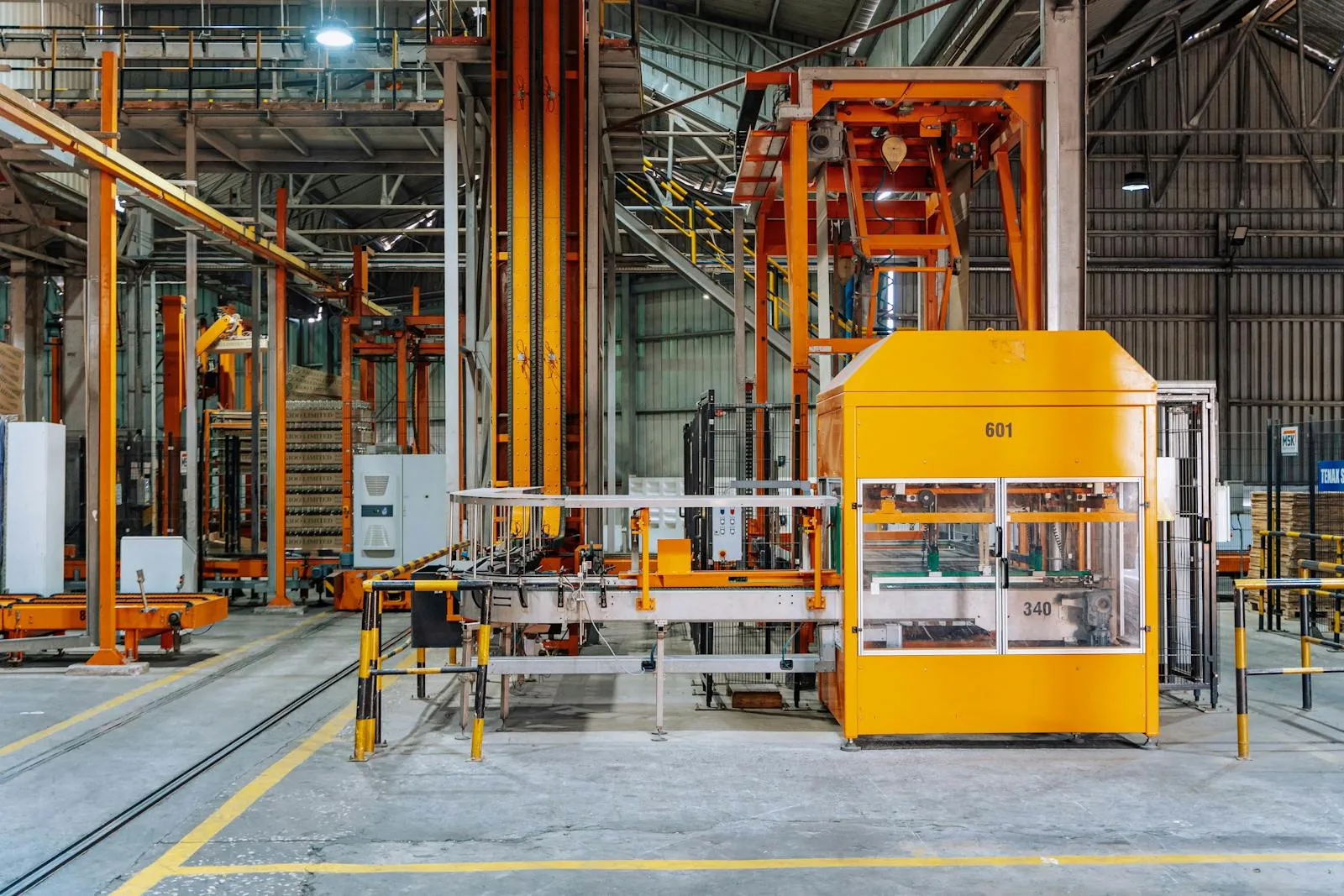
The press categories aren’t the payback categories.
The AI for manufacturing stories that get press are about predictive maintenance and autonomous quality control. The World Economic Forum’s Global Lighthouse Network tracks production-scale AI deployments across manufacturers, and the pattern there is consistent: the projects that pay back fastest aren’t the ones the press covers. In the audits gamgi has run with mid-market European manufacturers, three categories of operational work consistently produce ROI inside two quarters: production scheduling, supplier communication, and shop-floor reporting. None of them make the trade-press headlines. All of them are where the operational wins actually live.
Manufacturing AI automation got framed around the wrong wins
When a manufacturer commissions an AI scoping exercise, the brief almost always opens with predictive maintenance. The reasoning is standard: equipment downtime is expensive, sensor data exists, vendors pitch it as a flagship use case. The framing isn’t wrong. It’s just too narrow. Predictive maintenance is a real and shippable category, but it’s also one of the slowest-payback categories in manufacturing AI automation, because it requires sensor coverage, historical failure data, line-specific model tuning, and a maintenance-team workflow change to act on the predictions.
The faster-payback categories sit in the back office and on the planner’s screen, not on the production line itself. They don’t get pitched because they don’t demo well. A vendor showing off a vibrating-pump anomaly graph is more cinematic than a planner showing off a schedule that took three hours instead of two days to build. The cinematic asymmetry shapes the brief. Audits that reset the brief consistently find the same pattern: the planner’s desk and the supplier inbox carry more recoverable time than the production line does.
This article catalogues the three categories that pay back fastest, locates where AI predictive maintenance sits in the ranking, and names the conditions under which the press-favourite categories actually do pay back.
Three categories that pay back before AI predictive maintenance does
In the manufacturing audits gamgi has run, three categories of operational work consistently produce ROI inside two quarters. None of them are about the production line itself.
1. AI production scheduling. The planner’s job in a mid-market manufacturer is constraint-satisfaction under pressure: order book, material availability, line capacity, changeover times, shift coverage, customer priorities. Traditional ERP scheduling handles the easy version. The hard version, where the order book changes weekly and the planner spends a day a week re-jigging, is where AI production scheduling pays back. The system proposes a schedule against the constraints, the planner edits the bits the model got wrong, and the schedule lands in a few hours instead of a few days. Time saved per planner: 6-12 hours per week. Typical project €25-45K, payback in one to two quarters.
2. Supplier communication and document processing. Inbound POs from suppliers arrive in eleven different formats. Outbound POs to suppliers need to track changes. Invoice three-way matching consumes hours of clerical time. The AI extracts structured data from supplier emails and PDFs, matches POs to deliveries to invoices, and flags discrepancies for human review. Time saved per clerk: 40-60% of inbound-processing hours. Works because the document space is bounded by the firm’s actual supplier list, not by the open web. Typical project €15-35K.
3. Shop-floor reporting and shift handoffs. Shift supervisors spend 30-60 minutes per shift writing handoff notes, end-of-shift production summaries, and exception logs that nobody reads. The AI takes structured data from MES/SCADA systems plus the supervisor’s voice-noted exceptions and produces the report. Information density goes up because the supervisor stops writing the rote sections. Time saved per supervisor: roughly half an hour per shift, multiplied by three shifts a day. Typical project €15-30K.
Where AI predictive maintenance sits in the ranking. McKinsey’s operations research documents the same three-precondition pattern: predictive maintenance is a real category that ships, but it requires preconditions most manufacturers don’t have on day one: enough sensor coverage to detect early-failure signals, enough historical failure data to train the model against, and a maintenance team that will change its workflow to act on early predictions instead of running to failure. Without all three, the project becomes a sensor-deployment programme with an AI label, which is fine but isn’t what the brief asked for. Manufacturers with mature condition-monitoring already in place get to predictive maintenance ROI fast. Everyone else gets there in three to five years, not three to five months.
Together these four categories define what AI factory operations actually looks like in mid-2026 production. Most manufacturers in 2026 are sequencing AI projects in the wrong order (predictive maintenance first, scheduling and supplier work second) and burning twelve months proving the press-favourite category is harder than the brochure said.
What AI production scheduling actually changes on a real shop floor
Two anonymised audit observations from recent manufacturing engagements help locate where the time saving actually lands.
A mid-market specialty chemicals manufacturer. Three production lines, around 200 SKUs, a planner spending two days a week on the master schedule. The audit established that the planner’s job decomposed into: constraint-collection (one hour, structured), schedule-generation (eight hours, manual), and edge-case handling (three hours, judgement). The AI scheduler took the constraint-collection and schedule-generation work. The planner kept edge-case handling and a final review step. Schedule cycle went from two days to half a day. The planner moved the recovered time into customer-priority calls that had been getting deferred. The project shipped in 14 weeks for around €35K, and the unit economics dominated within the first quarter.
A contract food manufacturer. Inbound supplier POs and invoices arriving in seven different formats, three clerks spending most of their week on three-way matching and exception chasing. The AI extracted structured data from inbound documents, matched against the firm’s PO system, and flagged discrepancies for clerical review. Two of the three clerks moved to higher-value work in supplier-relationship and quality-claim handling. The clerks didn’t lose their jobs; the firm grew the order book without growing the clerical headcount. The deployment took 10 weeks and about €25K. Payback was inside the first quarter.
In both cases the AI worked because the operational scope was tight on purpose. The planner case wasn’t “schedule everything”; it was “generate the first-pass schedule against this defined constraint set.” The supplier case wasn’t “automate all back-office”; it was “extract structured fields from these specific document types from these specific suppliers.” The narrow framing is what makes the project shippable on a one-to-two-quarter timeline.
A structured audit is what surfaces which category your factory should start with, because the answer depends on the constraint that’s actually capping your throughput. The cheapest stuck pilot in manufacturing is the predictive-maintenance project that was scoped before anyone checked whether the sensor coverage existed. The wider failure pattern is in pilots that don’t make it to production. For the engagement-architecture question of how the project should be staffed, the audit-first process carries the structural detail.
When AI for manufacturing isn’t yet the right investment
The framework above pushes toward back-office and planning wins. There are cases where the answer is to wait or to do something else first:
- The constraint isn’t planning, it’s capacity. If the factory is throughput-constrained by machine hours or labour availability, no amount of AI scheduling recovers time that doesn’t exist. Add capacity first. AI scheduling helps once capacity meets demand within roughly 15%; outside that band, it’s solving a problem that isn’t the bottleneck.
- The data doesn’t exist or isn’t trustworthy. If MES/SCADA data is incomplete, badly tagged, or out of sync with the actual line state, AI tools amplify the data problem rather than fix it. Clean the data foundation first; deploy AI second.
- The constraint set isn’t written down. AI scheduling needs an explicit constraint set: changeover times, line capabilities, labour qualifications, customer priorities. If those live in one person’s head, the project rebuilds itself as a knowledge-elicitation exercise before any AI work can start. Worth doing anyway, but not within the AI budget.
- The team that owns it doesn’t exist. Same pattern as every other AI deployment. If no named operations lead owns the post-deployment system, the project stalls at handoff. The diagnostic framing in do you need an AI audit is the starting point before scoping any specific manufacturing AI project.
- Manufacturing AI gets framed around predictive maintenance and autonomous quality control. The faster-paying-back categories are back-office and planning: production scheduling, supplier communication, and shop-floor reporting.
- AI production scheduling pays back in one to two quarters at mid-market manufacturers where the planner spends a day-plus per week on the master schedule. Typical project €25-45K.
- Supplier-document and invoice automation saves 40-60% of clerical inbound-processing hours. Typical project €15-35K, payback in one quarter.
- AI predictive maintenance ships, but it requires sensor coverage, historical failure data, and a maintenance-team workflow change. Without those preconditions, the project becomes a multi-year sensor-deployment programme.
- The most common manufacturing AI mistake is sequencing: picking the press-favourite category first and burning twelve months proving the brochure was optimistic.
The fastest way to find out which category of AI factory operations actually fits your plant - production scheduling, supplier-document automation, shop-floor reporting, or eventually predictive maintenance - is to run a structured audit against your real constraint set and data foundation. Two weeks, fixed scope, fixed price. You leave with a category-by-category ROI estimate and a build sequence ranked by payback period. Most plants discover the category they were planning to start with is two quarters too far.
Book your audit