Custom AI for Healthcare: Which Applications Can Actually Be Tailored
In healthcare, how close an application sits to a clinical decision decides what to custom-build. Operational apps tailor well and ship; anything near a diagnosis is a regulated device, not a software contract.
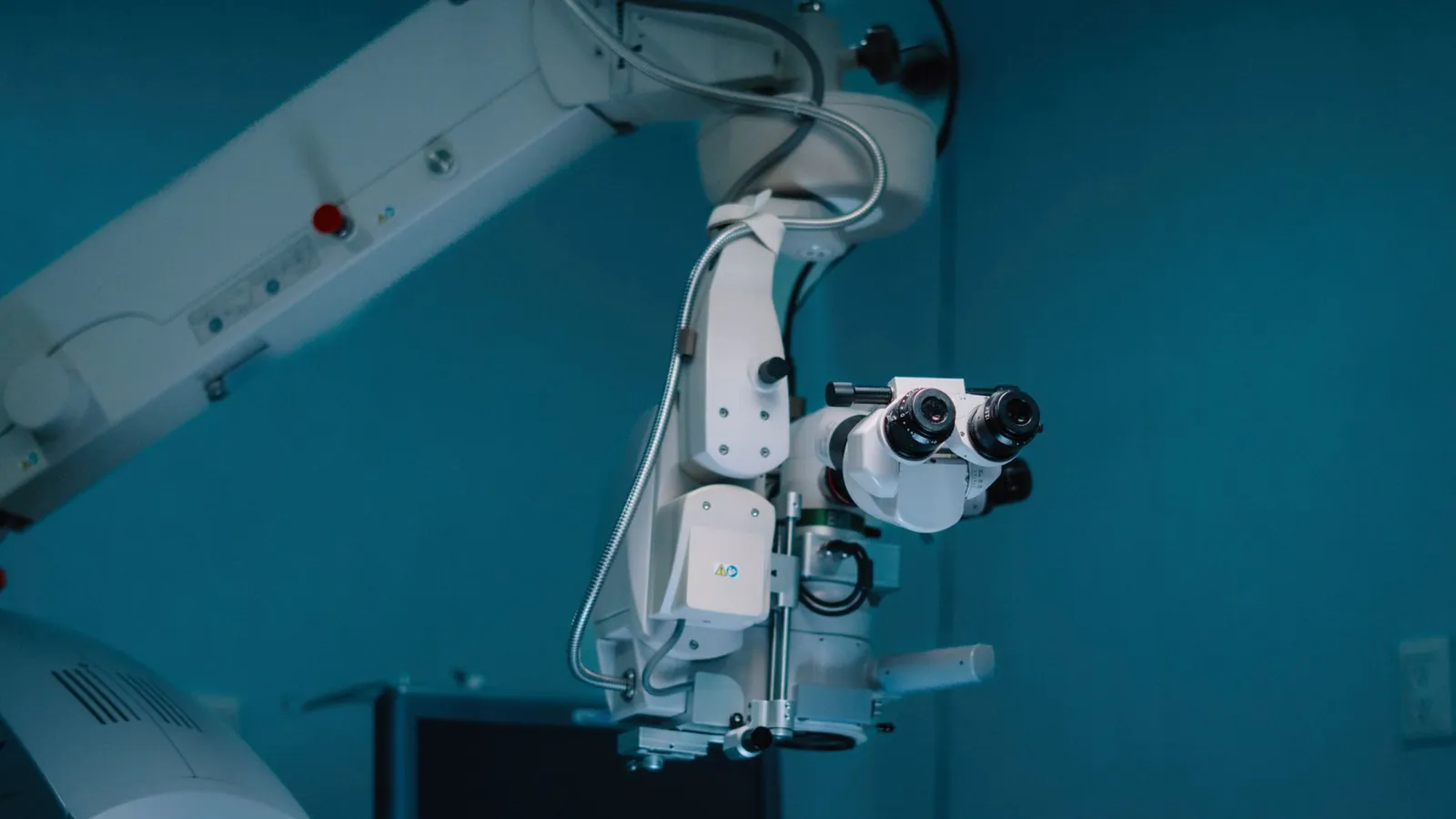
The useful question for custom AI for healthcare is not “what can AI do.” It is “how close does this sit to a clinical decision.” That distance, not the technology, decides what a healthcare provider can safely tailor and what it should leave alone. The applications that ship are the ones far from the bedside. The ones that make headlines, AI that diagnoses, are the ones a bespoke vendor build has no business near.
Why most healthcare AI solutions start in the wrong place
The attention in healthcare AI goes to diagnosis: spotting tumours, reading scans, predicting deterioration. Those are real research frontiers, and they are also regulated medical devices, years of validation, and not a project a clinic commissions from a software partner. Starting there is how a healthcare AI initiative stalls before it begins.
The healthcare AI solutions that actually reach daily use sit on the operational side of the building. Patient intake and triage routing. Appointment scheduling and reminders. Drafting documentation a clinician then reviews. Answering routine patient questions. Internal reporting. None of these makes a clinical call. All of them eat hours that should go to care. That gap, between where the attention goes and where the value sits, is the whole opportunity.
A simple rule: if a wrong output could harm a patient directly, it is not a custom-build candidate. If a wrong output wastes a few minutes of an administrator’s time, it probably is. Build down the risk gradient, not up it.
Which tailored AI medical applications are safe to build
Sort candidate applications by how far they sit from a clinical decision. The further away, the better the custom-build case.
- Far from the decision (build these first). Intake forms that route to the right department, appointment scheduling, reminders, billing admin, internal reporting. Low clinical risk, high hour-savings, fast to validate.
- Adjacent, with a human in the loop. Drafting visit notes, summarising a patient history, suggesting documentation codes, all reviewed and signed by a clinician before anything counts. Tailorable, but only with a hard human-review boundary.
- On the decision (do not commission a bespoke build).Diagnosis, triage that overrides a clinician, treatment recommendations. These are regulated devices or research, not a software engagement. A vendor who offers to “just build” one is the vendor to walk away from.
The partner question follows from the gradient. Choose on data and compliance discipline, GDPR handling for patient data, where the data lives, how PII is redacted, and on how seriously they treat the human-in-the-loop boundary. A partner who waves away the boundary is telling you they do not understand the setting.
What a hard safety boundary looks like in practice
The clearest build we have that lives on this boundary is in animal health, not human, but the discipline transfers exactly. Biscoito.ai, an assistant for a veterinary clinic, answers routine questions and routes everything else to the team. Its load-bearing feature is what it refuses to do: it never gives medical advice, never invents clinical information, and never suggests medication. The moment a message describes urgent symptoms, it stops and points to a human. That is the human-in-the-loop boundary built in hard, and it is the same boundary a human clinic’s operational AI needs.
For the operational wins specifically, the ones most clinics underuse, the ranked list is in AI in healthcare operations. And because the failure mode here is almost always scope rather than technology, why most AI projects fail is worth reading before you commission anything. Start on the operational side, prove the hours saved, then decide what is next.
When tailored healthcare AI is the wrong move
- Your EHR already has the module. If your records system ships the scheduling or messaging feature you want, turn it on. Do not rebuild what you already license.
- The application touches a clinical decision. If it does, the path is regulatory approval and clinical validation, not a software contract. Treat it as a different kind of project entirely.
- The data is not usable yet. If patient records are unstructured, scattered, or locked in formats nobody can query, the first job is data, not AI.
- Clinical-risk distance, not the technology, decides what healthcare AI can be tailored.
- The shippable applications are operational: intake, scheduling, documentation drafting, patient comms, reporting.
- Adjacent uses need a hard human-review boundary; on-the-decision uses are regulated devices, not software builds.
- Choose a partner on GDPR and data discipline and on how seriously they treat the human-in-the-loop boundary.
- Skip the custom build when your EHR covers it, when it touches a clinical call, or when the data is not usable yet.
The safest custom AI for healthcare starts on the operational side and earns the right to expand. gamgi’s audit maps where AI saves hours without going near a clinical decision, and scopes the data and compliance work honestly before a build begins. Which administrative hour, repeated across every patient, is costing your clinic the most?
Book your AI audit